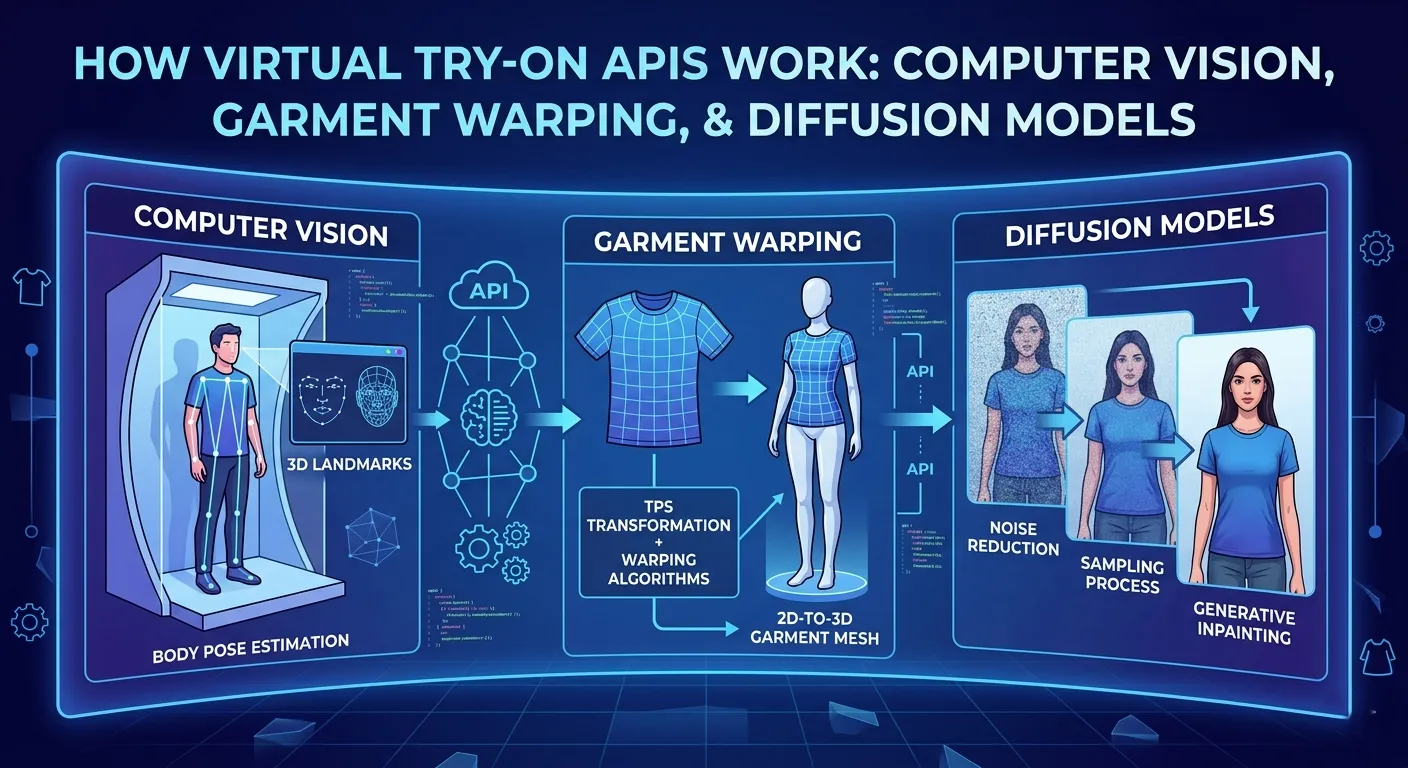
You don’t need a photoshoot to sell clothes online anymore. A $35 API call can put 1000 t-shirt, hoodies images on a model in minutes, and the result is good enough for your product page.
We tested five best virtual try-on APIs on the same garments: Fitroom, FASHN.ai, Kling, Claid.ai, and Photoroom. The quality gap between them is smaller than you’d think but the price gap is not. At 50,000 images/month, the cheapest option costs $800. Meanwhile, the most expensive costs $5,000. Same output quality. Very different bill.
Here’s everything we found: workflow, real output comparisons, and a full pricing breakdown so you know exactly what you’re paying for.
TL;DR: All five virtual try-on APIs produce commercially usable results. Fitroom costs 2–6x less than FASHN.ai and up to 14x less than Photoroom at scale. If budget matters, the choice is straightforward.
The 5 Virtual Try On APIs We Tested
The virtual try-on API market has grown fast. Dozens of tools exist, but only a handful are production-ready for fashion e-commerce, POD businesses, or app developers who need reliable throughput at scale. We narrowed it to five that represent the real competitive landscape right now.
Fitroom is a virtual try-on API built for fashion e-commerce, POD sellers, and app developers. It supports upper body, lower body, full-body, and combo try-on — top and bottom processed in a single request. Pricing starts at $35 for 1,000 images, credits don’t expire, and the REST API is simple enough to go live in a day.
FASHN.ai is a developer-focused try-on API that puts a premium on output quality. Alongside the standard upload flow, it offers 40+ preset models if you don’t have your own photos, plus a high-resolution Try-On Max mode for more demanding production needs. Pricing starts at around $0.075 per image on-demand.
Kling AI is primarily known as a video generation platform, but its virtual try-on feature has gained traction in the fashion space. There’s no native try-on API from Kling directly — access runs through third-party platforms like PiAPI or fal.ai, at around $0.07 per image. Credits expire after 90 days.
Claid.ai is an AI image platform covering background removal, enhancement, and virtual try-on, positioned toward enterprise catalog teams and agencies. The workflow is standard — upload garment, upload model — but pricing runs significantly higher than the rest of this group, starting at around $0.09 per image.
Photoroom takes a different approach entirely. Instead of asking for a model photo, you submit a garment flat-lay and Photoroom generates a complete lifestyle image — model, background, pose and all. It’s the only tool here that removes the need for model photography entirely. Pricing starts at $0.10 per image, and the Virtual Model feature requires a Plus plan with no free trial available.
Quality Benchmark: Same Garment, Five APIs
Test setup
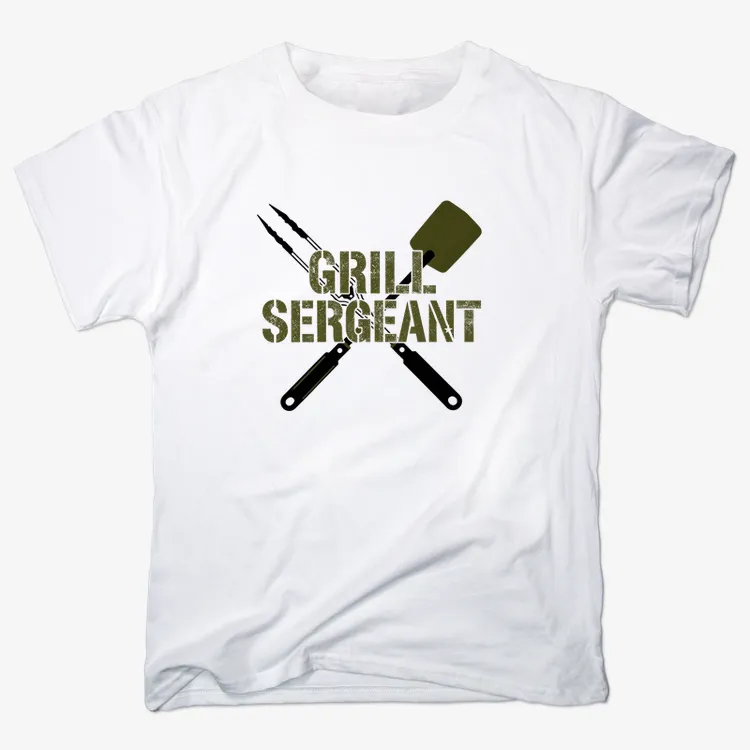
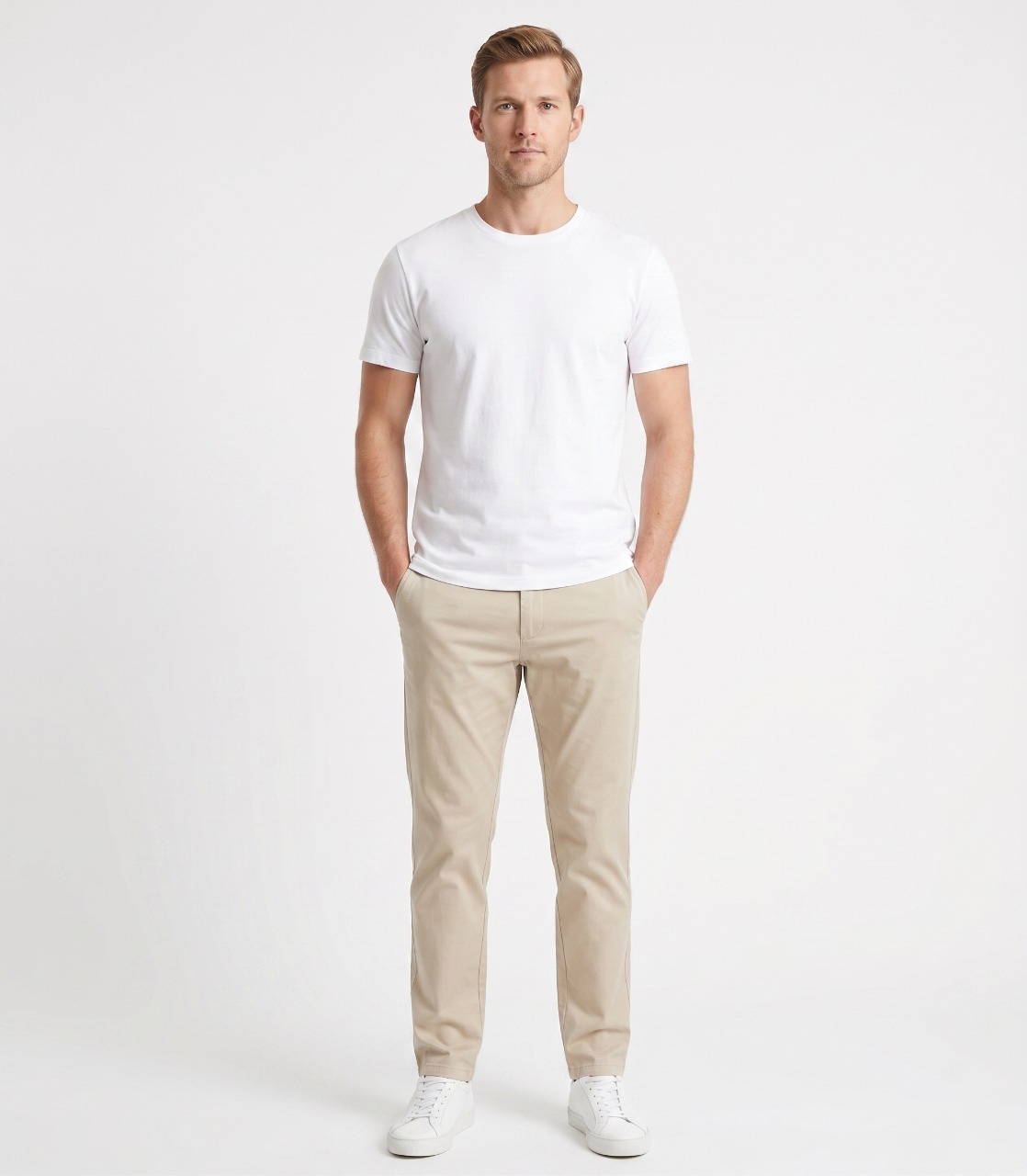
We used a white t-shirt on a male model across all five tools to establish a baseline. The test criteria: fabric texture accuracy, edge quality at sleeve and collar, body proportion preservation, and whether logos or prints transfer correctly.
| Garment image we used | Model image we used |
 |  |
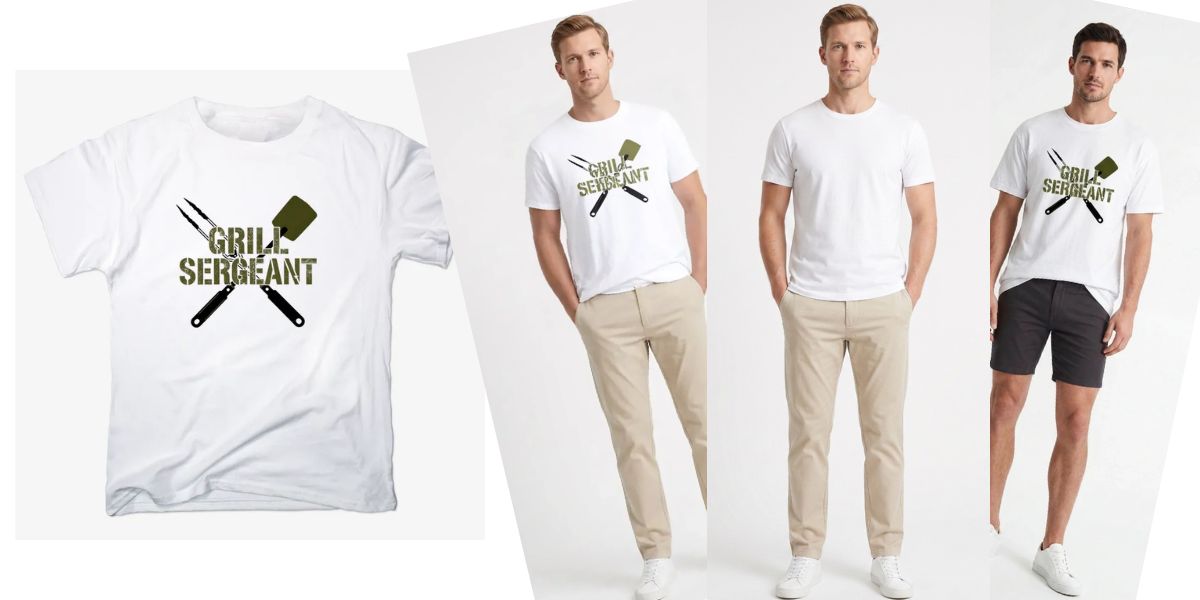
| Fitroom result | Kling result |
 |  |
| Claid.ai result | Fashn.ai result |
 |  |
Findings
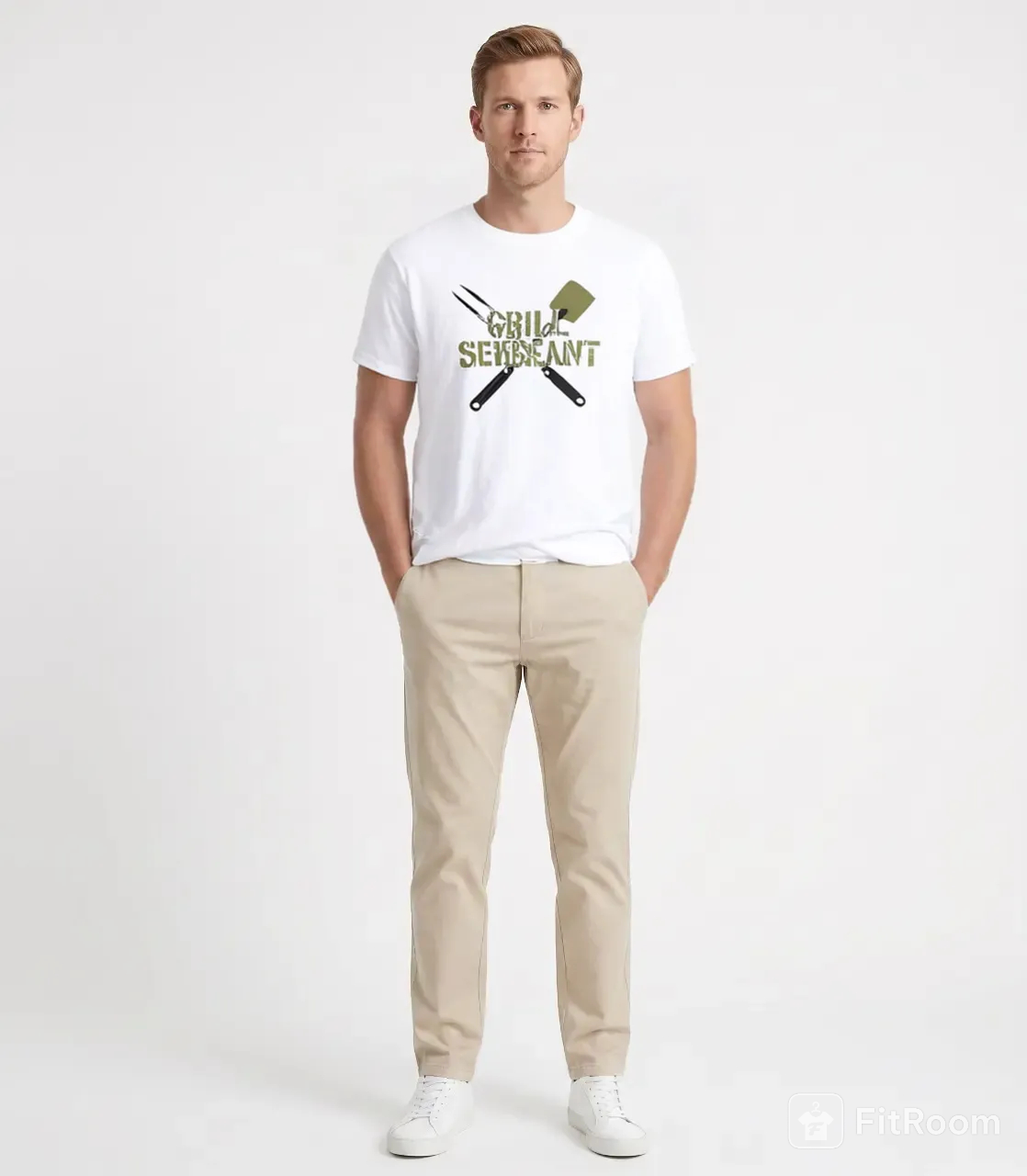
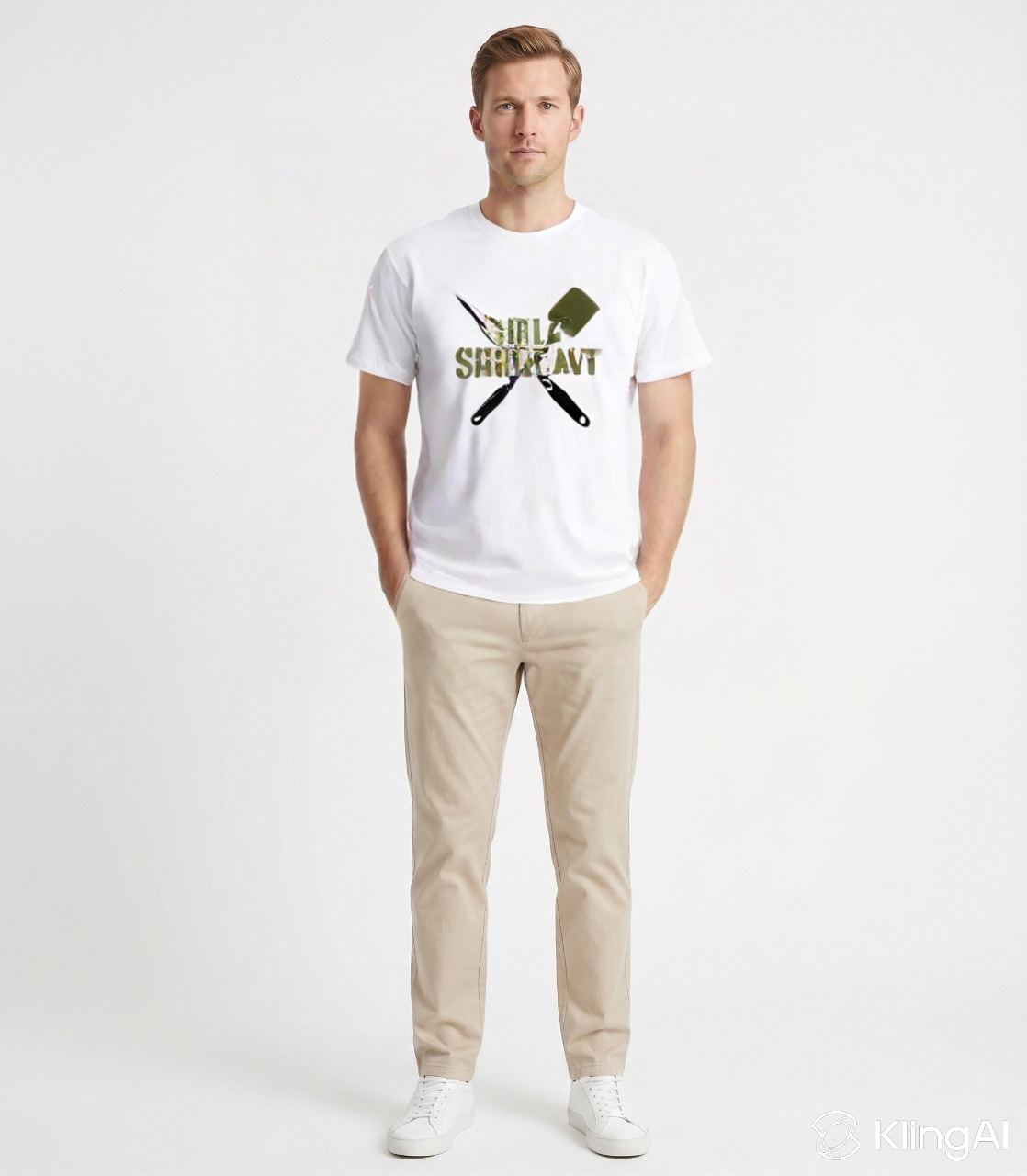
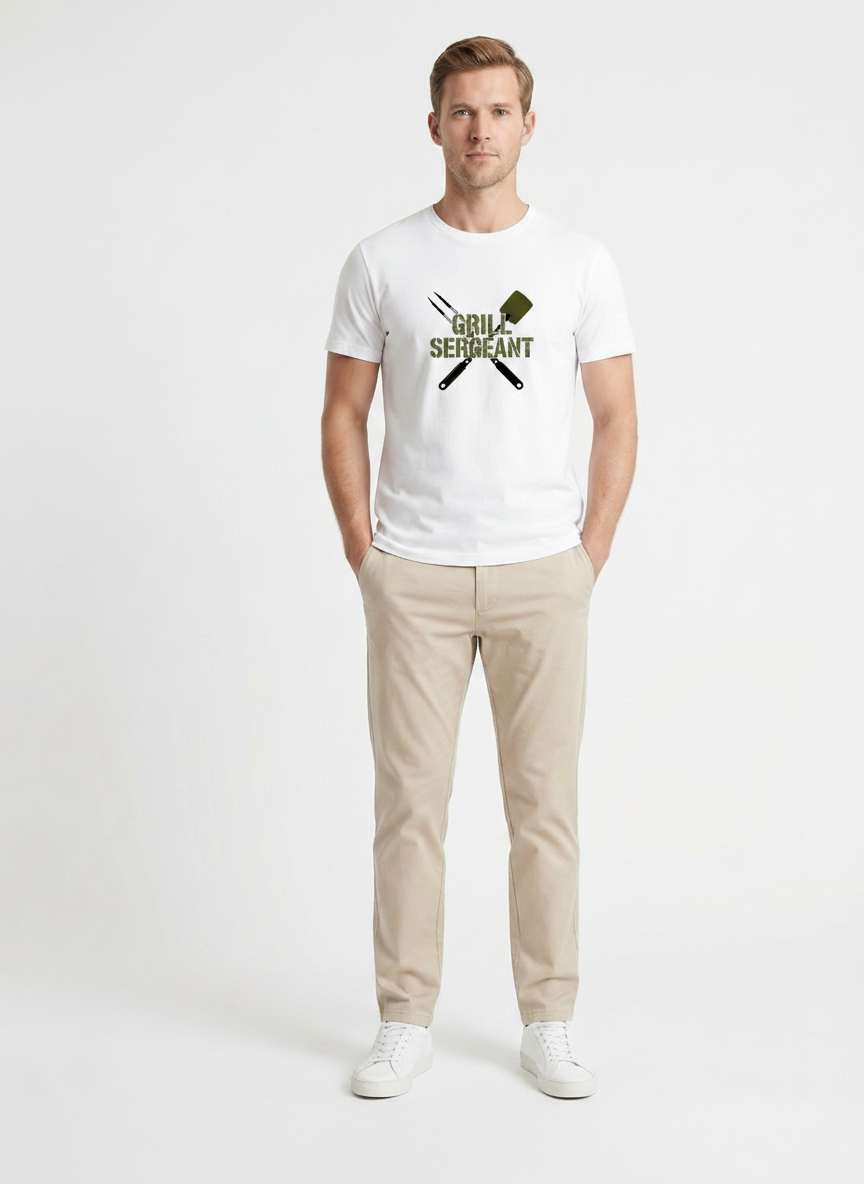
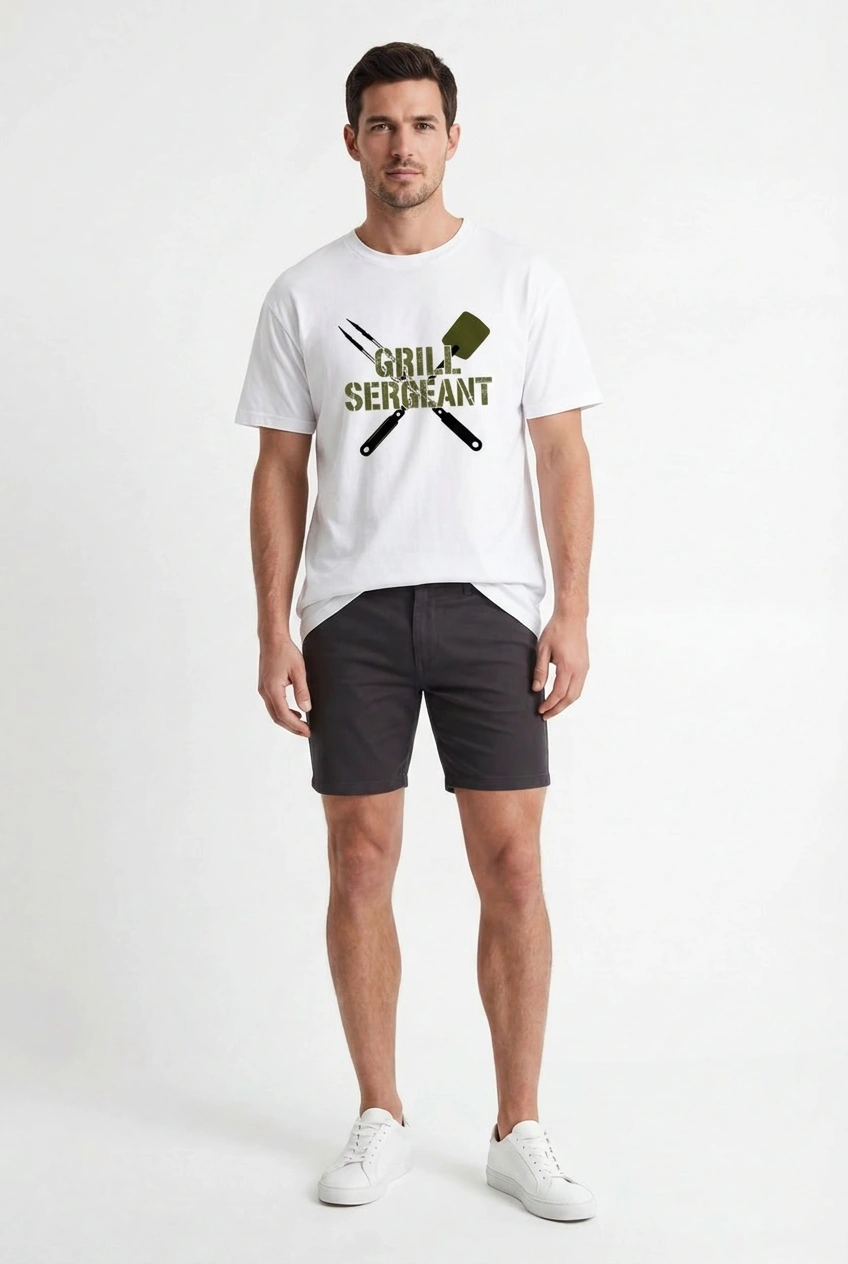
At first glance, you see all four results look good enought, right? Most people wouldn’t notice a difference. But zoom into the text print on the shirt and the gap becomes obvious.
- FASHN.ai handled it best. The lettering stayed crisp, and the model’s subtle front-hem lift gives the shot a natural, styled feel that you’d actually want on a product page.
- Fitroom’s text came through but with slightly softened pixel detail: readable, not perfect 100%.
- Claid.ai got most of it right but rendered the “R” close enough to a “B” that you’d catch it on a second look.
- Kling was the outlier: it dropped the “GRILL SERGEANT” print almost entirely, replacing it with something unrecognizable.
All four tools we fully tested produce results that are usable for product pages and marketing assets. FASHN.ai’s output showed slightly more natural drape and fabric detail in our white t-shirt test — a marginal edge, not a dramatic one.
Fitroom and Kling performed at comparable quality levels. Claid’s output was clean and consistent.
The honest verdict: if you showed five outputs to a fashion buyer without labels, they’d be hard-pressed to rank them by provider. The quality gap between the cheapest and most expensive tool here is much smaller than the price gap.
| API | Fabric texture | Edge quality | Print/logo fidelity | Overall |
|---|---|---|---|---|
| Fitroom | Good | Good | Good | ✅ Commercially usable |
| FASHN.ai | Very good | Very good | Very good | ✅ Marginally best in test |
| Kling | Good | Good | Good | ✅ Commercially usable |
| Claid.ai | Good | Good | Good | ✅ Commercially usable |
| Photoroom | N/A (no free test) | N/A | N/A | — No test result |
More garment types (hoodie, dress, sweater) will be added to this comparison once testing is complete.
5 Virtual Try-on API Pricing Compared At Scale
This is the section that changes decisions. Once you accept that quality across these tools is broadly equivalent, pricing becomes the only rational differentiator for anyone operating at scale.
Monthly cost by volume
| API | 1K images/mo | 10K–20K images/mo | 50K images/mo | 100K–250K images/mo | 500K images/mo |
|---|---|---|---|---|---|
| Fitroom | $35 | $400 | $800 | Contact | Contact |
| FASHN.ai | $75–$120 | $249–$1,249 | Contact | Contact | Contact |
| Kling | $70 | $700 | $3,500 | $7,000 | $35,000 |
| Claid.ai | $144 | $900 | $4,500 | $9,000 | $45,000 |
| Photoroom | $100 | $1,000 | $5,000 | $10,000 | $50,000 |
Pricing verified May 2026. Always confirm current rates directly with each provider.
Cost per image at scale
| API | $/image at 10K–20K | $/image at 50K | Notes |
|---|---|---|---|
| Fitroom | $0.020 | $0.016 | Credits don’t expire. Failed requests not charged. |
| FASHN.ai | $0.10–$0.24 | Contact | On-demand $0.075. Volume tiers bring it lower. Failed requests not charged. |
| Kling | $0.035–$0.07 | $0.07 | Credits expire in 90 days. No native API — third-party only. |
| Claid.ai | $0.045–$0.09 | $0.09 | Credits expire. Higher entry cost at small volume. |
| Photoroom | $0.10 | $0.10 | No free trial for Virtual Model. API setup is complex. |
Pricing verified May 2026. Always confirm current rates directly with each provider.
What this actually means at different scales
- Starting out: 1,000–5,000 images/month.
This is where most fashion brands and POD sellers begin. Fitroom starts at $35 for 1,000 credits, you can process your first 1,000 product images for the price of a lunch.
FASHN.ai at on-demand rates costs $75–$375 for the same volume — 2x to 10x more. Kling runs $70–$350. Claid starts at $144 for roughly 1,600 images — effectively $0.09/image before you even negotiate. Photoroom charges $100 minimum with no free trial for the Virtual Model feature.
At this scale, the dollar amounts feel manageable either way. But the percentage difference is actually largest here. A small POD shop processing 3,000 images/month pays $105 with Fitroom versus $450+ with Claid — saving $345/month, or $4,140/year — before they’ve even grown their catalog. That’s real money for a business at that stage.
- At 10k-20k images/month
Fitroom costs $400. FASHN.ai at on-demand rates costs $750–$2,400 depending on resolution and mode — that’s 2x to 6x more expensive for results that are only marginally better. Claid runs $900 at that volume — 55% more. Photoroom hits $1,000 — 150% more.
- Scale to 50k images/month ( for app/website developers) and the gap widens fast.
Fitroom: $800. Kling: $3,500 — 337% more. Claid: $4,500 — 462% more. Photoroom: $5,000 — 525% more.
The FASHN.ai case deserves its own sentence: yes, their output quality edged ahead in our test — sharper text, more natural drape. But at 10,000 images/month you’re paying at minimum $350 extra every month for that marginal improvement. At 50,000 images/month, that gap becomes thousands of dollars. Most fashion teams running real production volumes will find Fitroom’s output more than good enough — and will spend that difference on something that actually moves the needle.
Hidden costs that change the math
The sticker price isn’t always the real price. Three factors that affect your actual cost per successful output:
Failed request billing. If a request fails and you still get charged, your effective cost per successful image is higher than the listed rate. Fitroom and FASHN.ai both confirmed they don’t charge for failed predictions. Verify this with any other provider before committing.
Credit expiration. Kling credits expire after 90 days. If you have variable monthly volume — common in seasonal fashion — unused credits evaporate. Fitroom credits don’t expire. For pay-as-you-go workflows, this matters.
Combo try-on. If you’re selling full outfits (top + bottom), some providers require two separate API calls — doubling your cost. Fitroom supports upper + lower garments in a single request. None of the other four tools tested offer this natively.
Speed and Integration
| API | Processing speed | Output resolution | Integration complexity | Combo try-on |
|---|---|---|---|---|
| Fitroom | ~9s normal / ~30s HD | Up to 2048px | Simple REST, live in 1 day | ✅ Yes |
| FASHN.ai | 5–17s (v1.6) / 20–120s (Try-On Max) | Up to 4K (Try-On Max) | Simple REST + Python/TS SDKs | ❌ No (API) |
| Kling | ~10s | 768×1024 | Via third-party only (PiAPI, fal.ai) | ❌ No |
| Claid.ai | ~10–15s | — | Standard REST API | ❌ No |
| Photoroom | — | — | Complex — garment-only input, AI-generated model | ❌ No |
Speed across the group is similar for standard quality. The meaningful difference is that Fitroom, FASHN, and Claid all offer straightforward REST integrations. Kling’s lack of a native API adds a dependency on third-party platforms — fine for testing, potentially risky for production workloads that need SLA guarantees.
Fitroom vs FASHN.ai in details
Verdict: Which Virtual Try On API Should You Use?
Best for lowest cost at scale: Fitroom Virtual Try On API
It’s the only tool in this comparison that combines entry-level pricing ($35 for 1,000 images), no credit expiration, no failed-request charges, and combo try-on support. For POD sellers, fashion brands, and app developers who need consistent throughput, there’s no scenario where Fitroom isn’t the rational default.
Best for highest image fidelity: FASHN.ai API
Their output quality edges ahead of the group in our test, particularly on fabric texture. The on-demand rate of $0.075/image is 6–8x Fitroom’s cost at volume, but their volume commitment tiers can bring it down significantly. If photorealism is your primary metric and you’re at lower volumes, it’s worth the premium.
Best for automated catalog without model photos: Photoroom API
Their garment-in, lifestyle-photo-out approach is different from the rest. No model photos required, AI handles everything. Good for teams running thousands of flat-lay product images through an automated pipeline. Just know you’re locked into their model/scene library and the pricing is the highest in this group.
If you’re evaluating Kling or Claid: The quality is there, but the pricing doesn’t justify choosing them over Fitroom unless you have specific platform or contractual reasons to do so. Kling’s third-party-only API and 90-day credit expiry add real operational friction.
Frequently Asked Questions
Which virtual try-on API has the best quality?
FASHN.ai produced the sharpest fabric texture in our testing, but Fitroom, Kling, and Claid all deliver commercially usable results. The quality gap is much smaller than the price gap between them.
How much does a virtual try-on API cost per image?
Prices range from $0.012 per image (Fitroom at 50K volume) to $0.10 per image (Photoroom, Claid). At 100,000 images per month, Fitroom costs roughly $800 versus $9,000 for Claid and $10,000 for Photoroom.
Can virtual try-on APIs handle t-shirts, hoodies, dresses, and sweaters?
Yes. All five APIs in this comparison support tops, bottoms, dresses, and outerwear. Fitroom additionally supports combo try-on — processing upper and lower garments in a single request.
How fast is a virtual try-on API?
Fitroom processes standard requests in under 10 seconds. FASHN.ai’s standard endpoint takes 5–17 seconds; their premium Try-On Max model takes 20–120 seconds. Kling is comparable to Fitroom for speed.
Do virtual try-on APIs charge for failed requests?
Fitroom and FASHN.ai confirmed they don’t charge for failed predictions. Always verify this with any provider before committing — it can meaningfully affect your real cost per successful output, especially at scale.
Ready to test? Fitroom offers 10 free credits to start — no commitment. Start free →